|
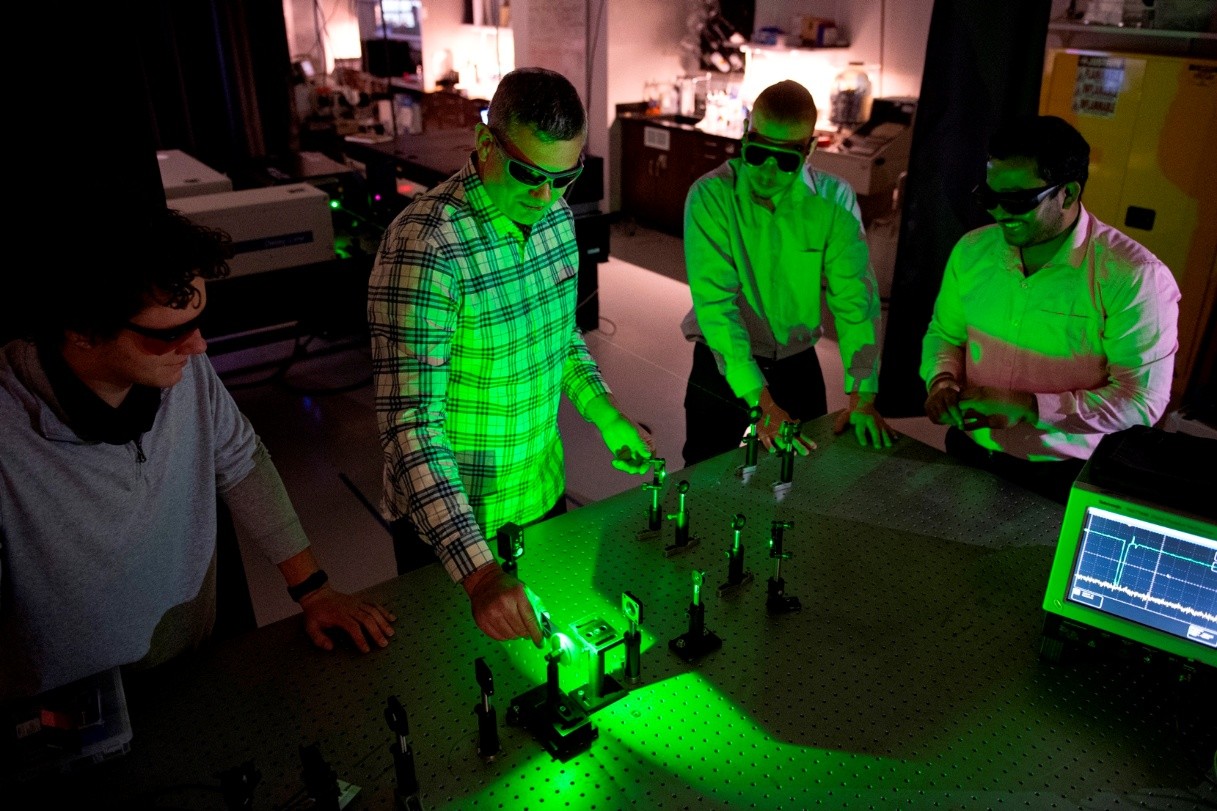
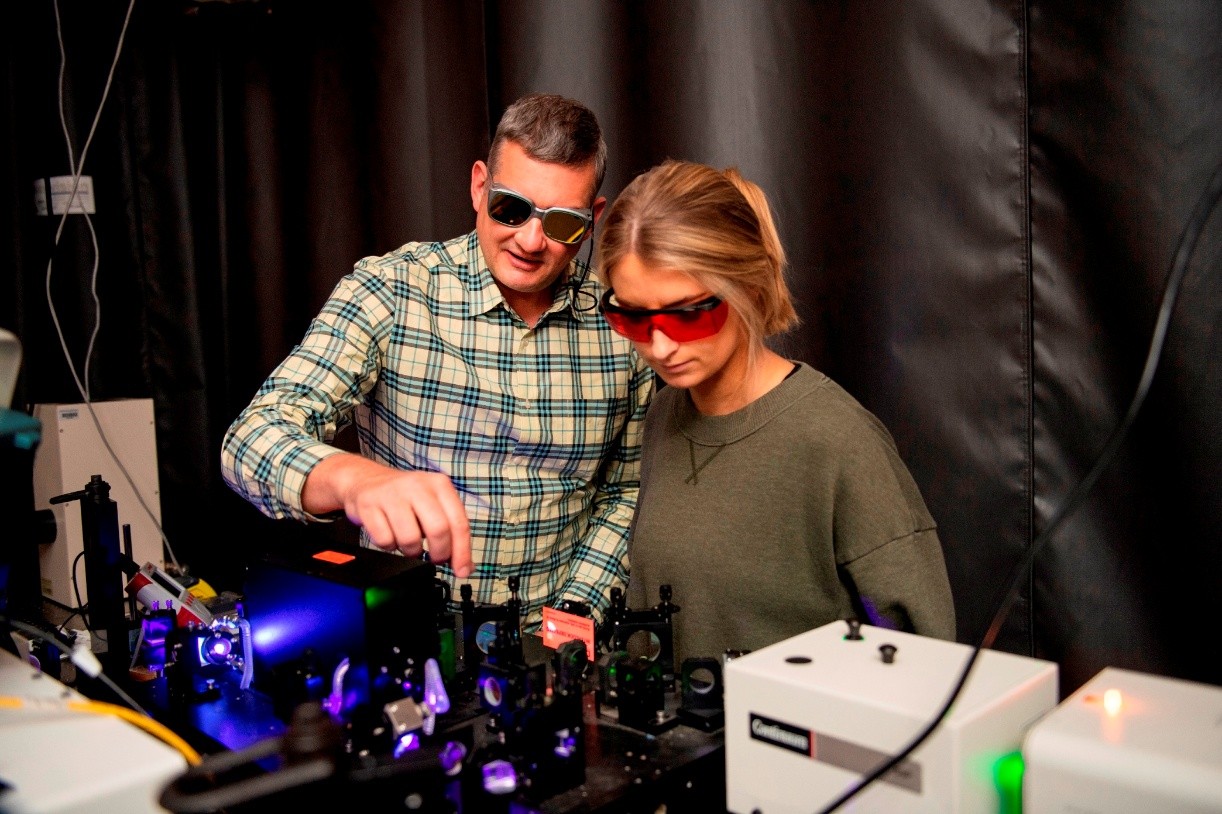
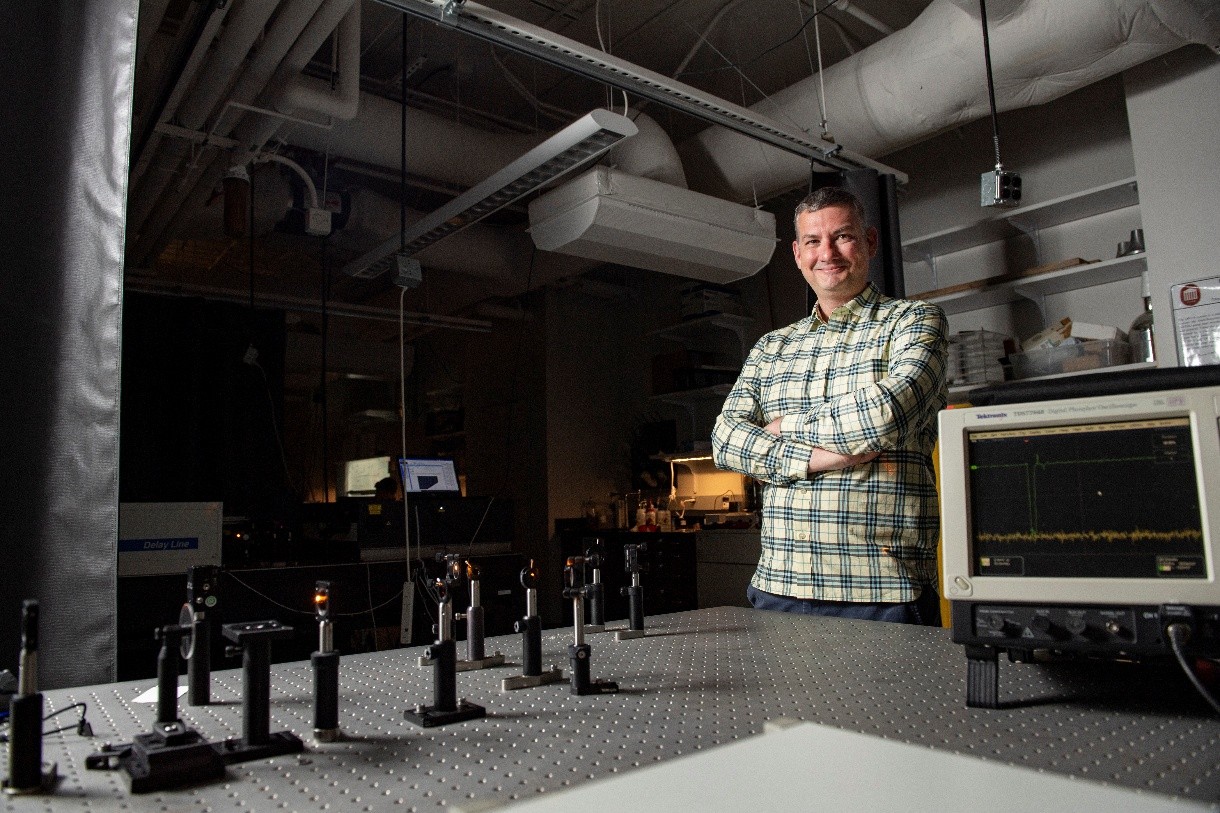
The Laser-Based Molecular Spec troscopy Group at the University of Mississippi aims to develop a molecular-level understanding of the photophysical properties and effects of noncovalent interactions on the properties of newly-developed materials and important biological and synthetic building blocks. Research capabilities span from single-molecule studies to bulk materials, with applications in biologically relevant building blocks and the characterization of newly-developed photocatalytic, light-harvesting and emissive materials. Work is conducted using laser-based spectroscopic methods and computational modeling. troscopy Group at the University of Mississippi aims to develop a molecular-level understanding of the photophysical properties and effects of noncovalent interactions on the properties of newly-developed materials and important biological and synthetic building blocks. Research capabilities span from single-molecule studies to bulk materials, with applications in biologically relevant building blocks and the characterization of newly-developed photocatalytic, light-harvesting and emissive materials. Work is conducted using laser-based spectroscopic methods and computational modeling.
Core Equipment & Capabilities:
Femtosecond and nanosecond transient absorption and excited state spectroscopy systems: Coherent Astrella fs pump laser, OPAs capable of producing ultraviolet to mid-infrared fs pulses, two Ultrafast Systems transient absorption spectrometers (Helios Fire and Helios-IR), and an Edinburgh Instruments ns Laser Flash Photolysis spectrometer.
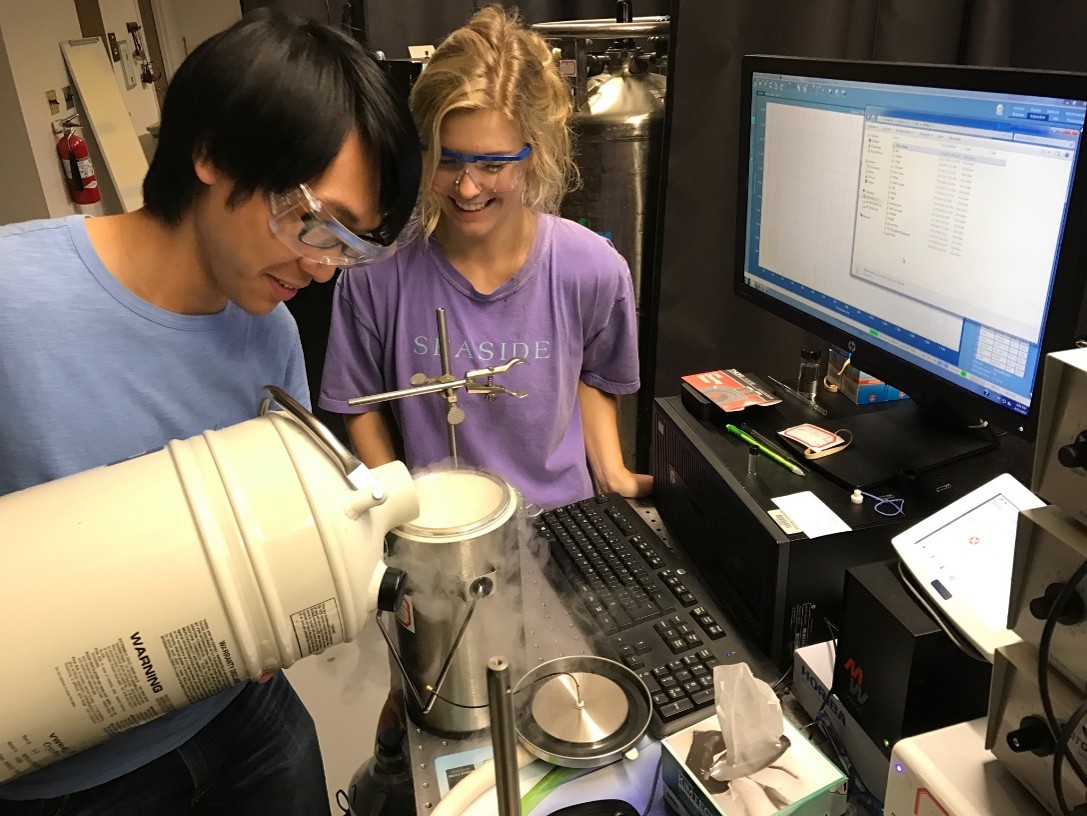
Fluorescence Spectroscopy: Diffuse reflectance and fluorescence emission, lifetimes, and efficiencies from single molecules, solutions, solids, and other environments from the ultraviolet to the infrared. For single-photon counting experiments, Picoquant ps lasers with excitation wavelengths of 375, 405, 485, 650 and 780 nm, a PDM avalanche photodiode detector and a TimeHarp200 single photon counting card. Horiba QuantaMaster 8075-11 Spectrofluorometer can acquire fluorescence from the ultraviolt out to 3 microns.
Raman Spectroscopy: High resolution and low energy Raman spectroscopy of interacting hydrogen bonded complexes and important materials.
New users: see Contact field below.
Established users: click here to access the calendars.
|
 Welcome!